
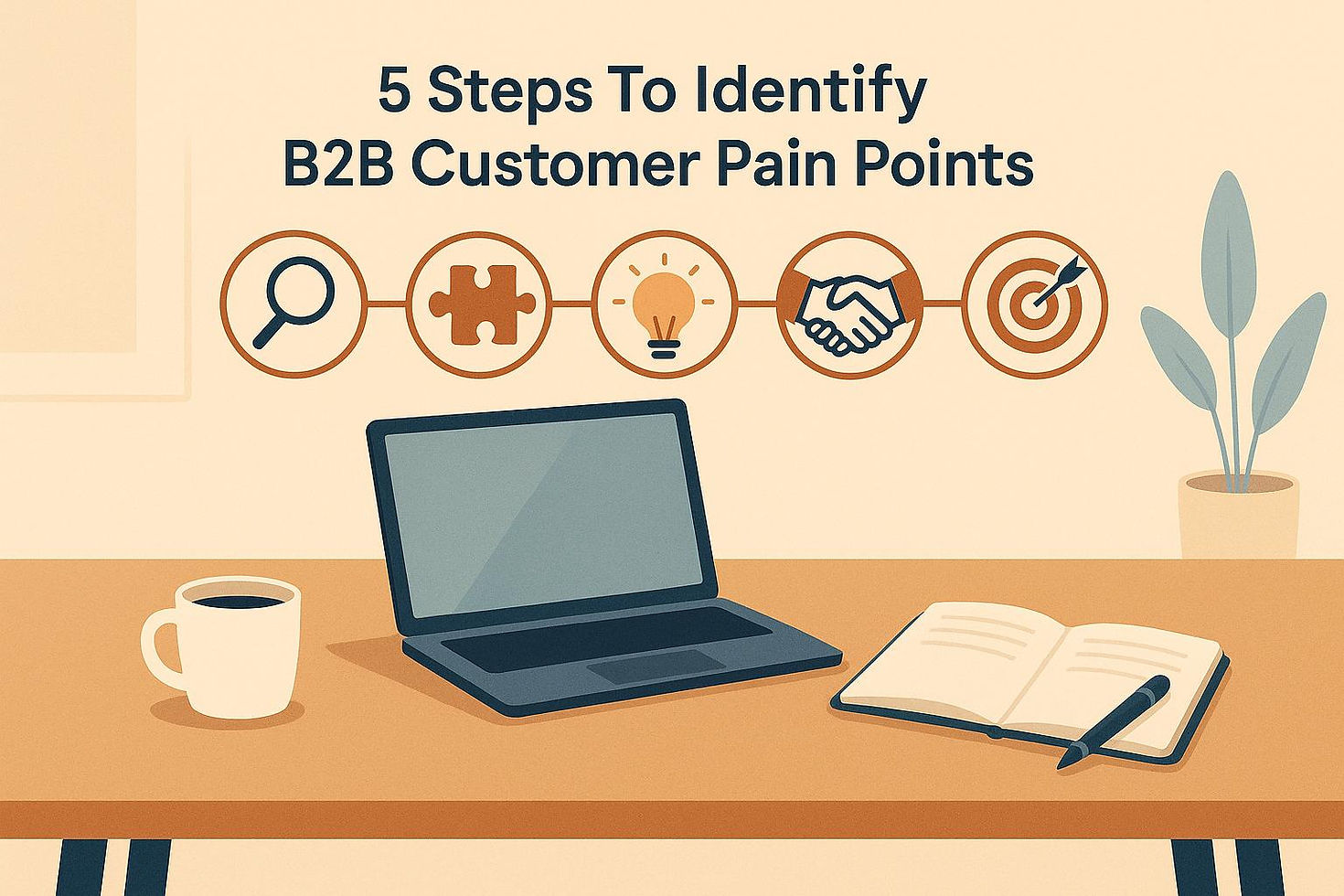
5 Steps To Identify B2B Customer Pain Points
Updated: Jan 6
In B2B sales, understanding customer pain points is critical to offering effective solutions and driving growth. Here's how you can identify and address these challenges quickly:
Research Your Market: Explore industry reports, forums, and competitor case studies to spot common issues.
Talk to Customers: Schedule direct conversations to gather honest feedback on their challenges.
Check Feedback: Analyze support tickets, reviews, and surveys to identify recurring problems.
Ask Your Sales Team: Leverage their insights from customer interactions to understand objections and needs.
Rank Pain Points: Prioritize issues based on frequency, severity, and your ability to solve them.
Key Types of Pain Points
Financial: High costs or revenue loss.
Productivity: Inefficiencies slowing growth.
Process: Operational roadblocks like siloed systems.
Support: Poor communication or slow responses.
By focusing on these steps and categories, you can create solutions that resonate with your audience and improve your sales messaging.
How to identify and solve your B2B customers' 5 biggest pain points
What B2B Customer Pain Points Mean
Understanding B2B customer pain points - specific challenges outlined earlier - is key to crafting effective sales strategies. These pain points highlight the obstacles companies face daily, often affecting their operations, efficiency, and profitability.
What Are Pain Points?
Pain points are the specific problems that hinder a business's growth, productivity, or profitability. These challenges often show up as:
Operational inefficiencies that waste time and money
Resource limitations that restrict expansion
Technical hurdles that prevent scaling
Compliance risks that jeopardize operations
Market competition that pressures performance
When businesses fully understand these issues, they can shift their role from being just vendors to becoming problem-solvers. This approach positions their products or services as solutions to real-world challenges.
Common Types of Pain Points
B2B pain points generally fall into four main categories, each with unique impacts on business operations:
Pain Point Type | Description | Examples | Impact |
Financial | Cost-related challenges | High expenses, revenue loss, unexpected costs | Directly affects profits and budget planning |
Productivity | Inefficiencies in workflows | Outdated processes, manual tasks, limited resources | Slows down growth and reduces output |
Process | Operational roadblocks | Complex approvals, siloed data, disconnected systems | Leads to wasted resources and delays |
Support | Service-related issues | Poor communication, slow responses, inadequate assistance | Hurts reliability and customer satisfaction |
Each category demands a tailored approach. By identifying these pain points, businesses can:
Deliver precise solutions
Adjust their messaging to address specific needs
Build stronger relationships based on trust
Show their value as a partner, not just a provider
Next, we'll dive into actionable methods for identifying these pain points effectively.
5 Steps To Find Customer Pain Points
Identifying B2B customer pain points involves a clear process that combines research, direct communication, and analyzing data. Here's a step-by-step guide to help you uncover and understand your customers' challenges.
Step 1: Research Your Market
Begin with thorough market research to uncover common challenges and trends in your industry. This will help you define your Ideal Customer Profile (ICP) and spot recurring issues in your target audience. Look into:
Industry reports
Professional forums
Competitor case studies
Trade publications
Social media groups specific to your industry
Pay close attention to patterns and repeated problems across these sources. This will help you determine whether certain pain points are isolated or widespread. After gathering this data, move on to validating it directly with your customers.
Step 2: Talk to Customers
Conversations with customers are one of the best ways to understand their challenges. Make sure these discussions encourage honest feedback. Here's how to approach it:
Schedule one-on-one video calls.
Reach out via email or LinkedIn.
Use personalized discussion guides to focus the conversation.
Record the calls (with permission) for later analysis.
Follow up with additional questions as needed.
These direct interactions provide insights that other methods might miss.
Step 3: Check Customer Feedback
Review customer feedback from various channels to identify recurring problems. This includes:
Support tickets
Online reviews and ratings
Social media mentions
Survey responses
Product feedback forms
Set up a system to organize and track feedback. This will help you spot trends and prioritize the most common or critical issues.
Step 4: Ask Your Sales Team
Your sales team often has valuable insights because they interact with customers daily. They can share:
Common objections during sales calls
Frequently asked questions
Issues that cause deals to fall through
Competitive advantages customers mention
Stories of success and failure
Regularly meet with your sales team to gather their input. Their firsthand experience can confirm findings from your other research methods and provide additional context.
Step 5: Rank Pain Points
Once you've collected all your data, prioritize the pain points using these criteria:
Criteria | Key Questions | Impact |
Frequency | How often does this issue come up? | High/Medium/Low |
Severity | How much does it disrupt business? | Critical/Moderate/Minor |
Solution Potential | Can your product or service address it? | Direct/Partial/Indirect |
Business Impact | What’s the cost of leaving it unresolved? | Significant/Moderate/Minimal |
Focus on the most pressing issues - those that occur frequently and have a major impact on your customers’ businesses. This ensures your solutions address the challenges that matter most.
Using Pain Points in Sales Messages
Once you've identified and prioritized pain points, use them to shape your sales messages. Your goal is to directly address these challenges with solutions that resonate.
Match Messages to Problems
Turn your list of pain points into focused sales messages. Each message should address a specific challenge and offer a clear solution.
Pain Point Component | Message Element | Purpose |
Problem Description | Current Situation | Show you understand the challenge |
Impact | Business Cost | Highlight how the issue affects operations |
Solution | Value Proposition | Offer your specific solution |
Outcome | Results | Showcase measurable benefits |
Here’s how to tailor your messaging across different platforms:
Email communications: Keep it short and solution-focused. Address a specific pain point and how your product or service resolves it.
LinkedIn messages: Use a conversational tone. Show industry expertise and understanding of the recipient's challenges.
Sales calls: Prepare with real examples and data to back up your claims.
Customizing these messages ensures you're addressing customer needs effectively while staying flexible as market demands shift.
Update Messages Regularly
Customer challenges and market conditions are always changing. Keep your messaging fresh to stay relevant.
1. Monthly Review
Look at feedback from recent customer interactions.
Spot any new patterns in challenges or concerns.
2. Quarterly Assessment
Measure how well your messages are working.
Identify which pain points and solutions are performing best.
3. Continuous Refinement
Incorporate new customer feedback.
Adapt to market shifts.
Experiment with different message variations.
Track response rates to see what resonates.
Update your value propositions as needed.
Conclusion
Pinpointing and addressing B2B customer pain points calls for a structured approach that blends in-depth research, direct communication with customers, and ongoing adjustments to your sales strategies. By sticking to the five-step process outlined here, businesses can better understand customer struggles and create tailored solutions.
Understanding customer pain points allows you to offer focused solutions, close sales more effectively, and nurture strong, long-term relationships. Keep in mind, this isn’t a one-time effort - customer needs, market trends, and business challenges are always shifting. Regular evaluations help ensure your sales strategies stay relevant and effective.
Use these insights to connect with decision-makers through email and LinkedIn. Make sure every interaction demonstrates a clear grasp of your clients' unique challenges.
FAQs
What’s the best way to prioritize B2B customer pain points so I can focus on solving the most critical challenges first?
To effectively prioritize B2B customer pain points, start by gathering insights from customer feedback, data analysis, and market research. Identify recurring themes or issues that impact your customers' operations, revenue, or efficiency the most.
Once you've identified these pain points, rank them based on urgency and the potential value of resolving them. Focus on addressing the challenges that directly affect your customers' decision-making or ability to achieve their goals. This ensures you're providing solutions where they matter most, building trust and driving results for your business relationships.
What are the best ways to gather honest and actionable feedback from B2B customers about their pain points?
To gather meaningful feedback from B2B customers about their pain points, focus on building trust and creating opportunities for open communication. Here are a few effective strategies:
Conduct personalized interviews: Schedule one-on-one conversations with key decision-makers or stakeholders to dive deeper into their challenges. Personal interactions help uncover insights that surveys might miss.
Send targeted surveys: Use short, focused surveys tailored to your customers’ industries and roles. Keep questions specific and actionable to encourage thoughtful responses.
Leverage customer support insights: Analyze recurring issues or complaints raised with your support team. These can reveal common pain points your customers face.
Monitor online reviews and forums: Pay attention to what customers are saying about your business or similar solutions on platforms like LinkedIn, review sites, or industry forums.
By combining these approaches, you can gain a clearer understanding of your customers’ pain points and address them effectively. If you need help identifying and connecting with the right decision-makers, Artemis Leads specializes in B2B lead generation and can assist in streamlining this process.
How can I keep my sales messaging relevant to changing B2B customer needs and market trends?
To stay relevant, regularly update your sales messaging based on customer feedback, market research, and performance data. Start by clearly defining your Ideal Customer Profile (ICP) and focusing on businesses that align with it. This ensures your outreach is targeted and effective.
Partnering with experts like Artemis Leads can help streamline this process. They identify decision-makers within your target companies, qualify prospects, and arrange meetings, giving you access to high-quality leads. By engaging directly with these prospects, you can refine your messaging to address their specific pain points and adapt quickly to evolving market conditions.


